

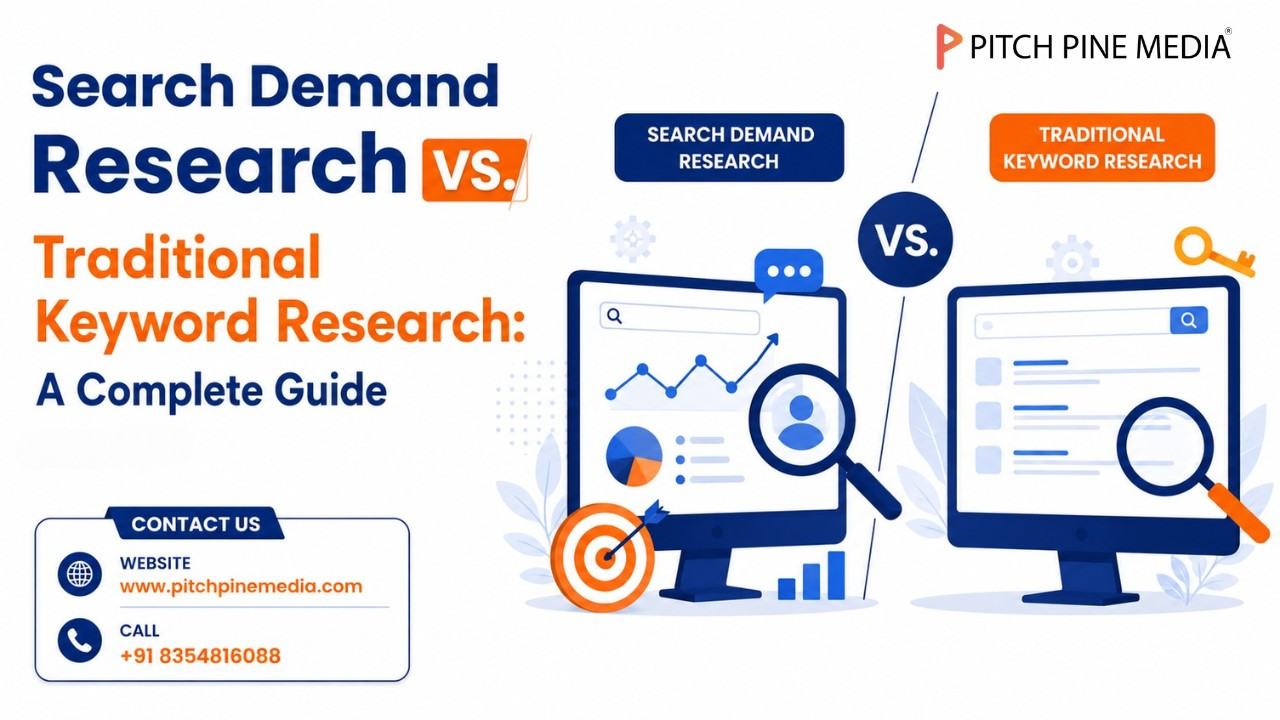
In the past decade, much has changed in the field of digital marketing, including how we analyze the keywords our audience searches for. If you have had experience with SEO campaigns in the past, then you must have come across the conventional keyword research methodology. However, there is a more complete version of this method known as search demand research. Here at Pitch Pine Media, we assist companies in understanding these different types of methodologies so that they can create content that really works.
Knowing the distinction between these different forms of analysis can be a game-changer in terms of your company’s SEO strategy. Let’s discuss the details of both methodologies so that we can see how one stands out from the other.
What Is Traditional Keyword Research?
Traditional keyword research has served as the main pillar of SEO for more than two decades now. This kind of keyword research is centered on identifying particular words and phrases that users enter into search engines and optimizing content based on those particular words.
Traditional keyword research usually includes the following steps:
- Utilizing tools such as Google Keyword Planner, SEMrush, and Ahrefs for identifying keyword volumes
- Analyzing levels of competition for certain keywords
- Choosing keywords which have high volume and low levels of competition
- Preparing content based on chosen keywords
The traditional keyword research suits situations when the intention of the user is clear and easy to identify. For example, a person who types the phrase “best running shoes” expects some recommendations about products. In such cases, the traditional keyword research works best.
Unfortunately, there are certain disadvantages of traditional keyword research.
Understanding Search Demand Research
Unlike traditional keyword-based SEO techniques, search demand research provides a broader perspective on the needs of the potential audience. This strategy evaluates not just a set of keywords but a whole set of factors related to the user’s intent, content gap, and market potential.
The factors include:
- Patterns of User Intent: Learning about why users look for particular keywords and what do they intend to do after that
- Content Gap: Finding the topics that have not been covered enough by your competitors
- Seasonality: Detecting how search behavior changes depending on the time of the year
- Long Tail: Uncovering particular searches that demonstrate higher chances of conversions
- Semantic Connections: Revealing relationships between different topics and concepts
Key Differences Between the Two Approaches
Shifting from traditional keyword research to search demand research requires a complete paradigm shift in SEO and content marketing.
Scope of Research
While traditional keyword research focuses on particular keywords and metrics related to them, search demand research takes into account topic clusters, user journey and markets where your product or service may work. Thus, while traditional keyword research is focused on individual trees, search demand research can help you see the whole forest.
User Intent
It is common to assume that if there is much searching for some keyword, then this keyword is very valuable. However, in some cases, search demand research may show you that user intent behind low volume keyword may be more important than a high volume of another informational keyword.
Content Strategy Approach
While in traditional keyword research you build content around a certain keyword, search demand research requires developing content hubs that would cover all the topics and help you become the industry authority.
Competitor Analysis
While traditional keyword research measures keyword difficulty, search demand research takes into account the content that is ranking high, analyzes its depth and finds possible gaps that you can exploit.
Why Search Demand Research Matters More Today
Several factors have made search demand research increasingly important for modern businesses.
Search Engines Have Evolved
Google’s algorithms have become incredibly sophisticated at understanding context, intent, and content quality. Simple keyword optimization no longer guarantees rankings. Search engines now prioritize content that comprehensively addresses user needs.
User Behavior Has Changed
Modern searchers are more sophisticated. They use voice search, ask complex questions, and expect personalized results. Traditional keyword research often misses these nuanced behaviors.
Competition Has Intensified
With more businesses competing for attention online, simply targeting high-volume keywords is no longer sufficient. You need to find unique angles, underserved topics, and specific user needs that your competitors are missing.
Content Expectations Have Risen
Users expect comprehensive, authoritative content that answers their questions thoroughly. Thin content optimized around single keywords rarely performs well in today’s search environment.

How to Conduct Effective Search Demand Research
Implementing search demand research requires a different mindset and toolkit compared to traditional methods.
Start with Your Audience
Before diving into tools, spend time understanding your target audience. What problems do they face? What questions do they ask? What information do they need at different stages of their journey? This foundational understanding guides all your research efforts.
Analyze Search Patterns
Use tools like Google Trends, AnswerThePublic, and AlsoAsked to understand broader search patterns. Look for related questions, seasonal trends, and emerging topics in your industry.
Study Your Competitors
Analyze what content is ranking for your target topics. Look beyond individual keywords to understand the overall content strategy. What topics are they covering comprehensively? Where are the gaps you can fill?
Map User Journeys
Create detailed user journey maps that show how people move from awareness to consideration to decision. Identify the questions and information needs at each stage, then create content that addresses those specific needs.
Validate with Data
While search demand research is more qualitative than traditional methods, you still need data to validate your hypotheses. Use analytics tools to track how your content performs and refine your approach based on real user behavior.
Integrating Both Approaches for Maximum Impact
SEO success is sometimes found in combining both traditional keyword research and search demand research. The following is how you can combine them:
Traditional Research Methods for a Base
Begin with traditional keyword research to find core terms and to understand basic volumes of search. This provides you with a base to work from.
Search Demand Information to Inform Your Strategy
Utilize search demand research to build up your overall content strategy and to inform your topic clustering.
Discovery Traffic and Converting Content
Traditional keyword research will help to get discovery traffic, and search demand research will help to write converting content.
Monitoring Your Performance
Constantly analyze the performance of your website and be ready to make changes in your strategy depending on the changes in the search and user behavior.
Common Mistakes to Avoid
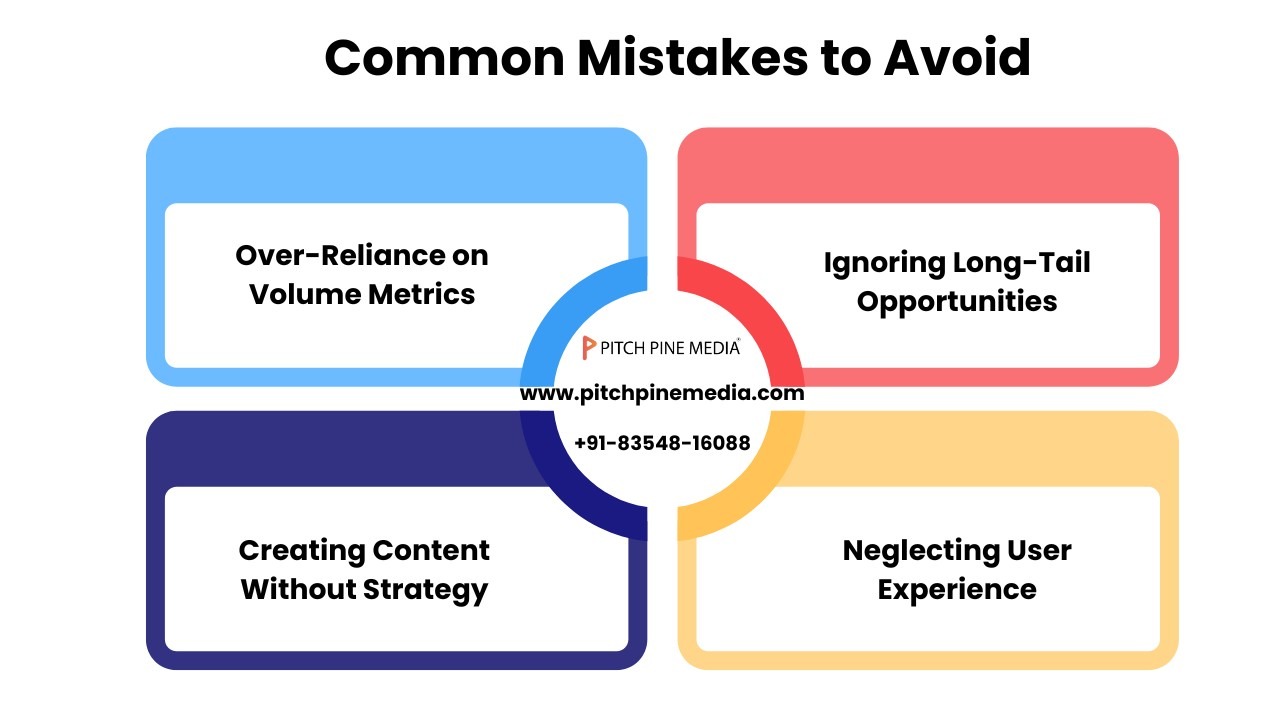
As you transition from traditional keyword research to search demand research, watch out for these common pitfalls:
Over-Reliance on Volume Metrics
High search volume does not always equal high value. Focus on intent and conversion potential rather than just numbers.
Ignoring Long-Tail Opportunities
Long-tail keywords often indicate higher purchase intent and face less competition. Do not overlook these valuable opportunities.
Creating Content Without Strategy
Random content creation based on individual keywords rarely produces sustainable results. Develop a comprehensive content strategy based on search demand insights.
Neglecting User Experience
Even the best keyword research cannot compensate for poor user experience. Ensure your content is easy to read, navigate, and engage with.
How Pitch Pine Media Can Help
At Pitch Pine Media, we specialize in helping businesses develop comprehensive SEO strategies that combine the best of both traditional and modern approaches. Our team understands the nuances of search demand research and can help you identify opportunities that your competitors are missing.
We offer complete SEO services that include in-depth search demand analysis, content strategy development, and ongoing optimization. Whether you are just starting your SEO journey or looking to enhance your existing efforts, we can help you build a strategy that drives sustainable growth.
Our approach focuses on understanding your unique business goals, target audience, and competitive landscape. We do not just chase keywords. We create comprehensive content strategies that establish your authority, engage your audience, and drive measurable results.
The Future of Keyword Research
As search technology continues to evolve, the line between traditional keyword research and search demand research will continue to blur. Voice search, AI-powered search assistants, and personalized results are making it increasingly important to understand user intent rather than just targeting specific terms.
Businesses that embrace search demand research today will be better positioned to adapt to these changes tomorrow. The key is to remain flexible, stay focused on user needs, and continuously refine your approach based on data and insights.
Making the Shift
Switching from regular keyword research to search demand research doesn’t mean forgetting everything about SEO you have learned before. It is just about enriching your set of tools and taking a more holistic approach to serving your target audience.
First of all, audit the content strategy that you currently have and find out the areas where you can use the search demand research approach and stop focusing on single keywords. After that, start applying search demand research to the planning process.
The effects will not be instant, but switching companies to this approach often lead to impressive results.
Ready to Transform Your SEO Strategy?
At Pitch Pine Media, we believe that effective SEO starts with understanding what your audience actually wants and needs. Our search demand research approach helps you create content that resonates with users and performs well in search results.
If you are ready to move beyond traditional keyword research and build a more comprehensive SEO strategy, we would love to help. Contact us today to discuss how our digital marketing services can help you reach your business goals.
The future of SEO belongs to businesses that understand search demand, not just search volume. Let us help you join them.
Frequently Asked Questions
Q. How is Search Demand Research different from keyword research?
Ans: Traditional keyword research focuses mainly on individual keywords, while Search Demand Research looks at broader search behavior, topics, intent, and demand patterns.
Q. Is Search Demand Research better than traditional keyword research?
Ans: Not necessarily. Search Demand Research provides broader insights, while keyword research remains useful for identifying specific terms to target.
Q. Why is Search Demand Research important for SEO?
Ans: It helps businesses understand audience demand and create content that addresses real search intent rather than focusing only on individual keywords.
Q. How can businesses use Search Demand Research?
Ans: Businesses can use it to identify content topics, understand search intent, find new opportunities, and build more comprehensive SEO strategies.
Q. Can Search Demand Research help with AEO and GEO?
Ans: Yes. It can help identify the questions, topics, and intent that users may bring to search engines and AI-powered answer platforms.