

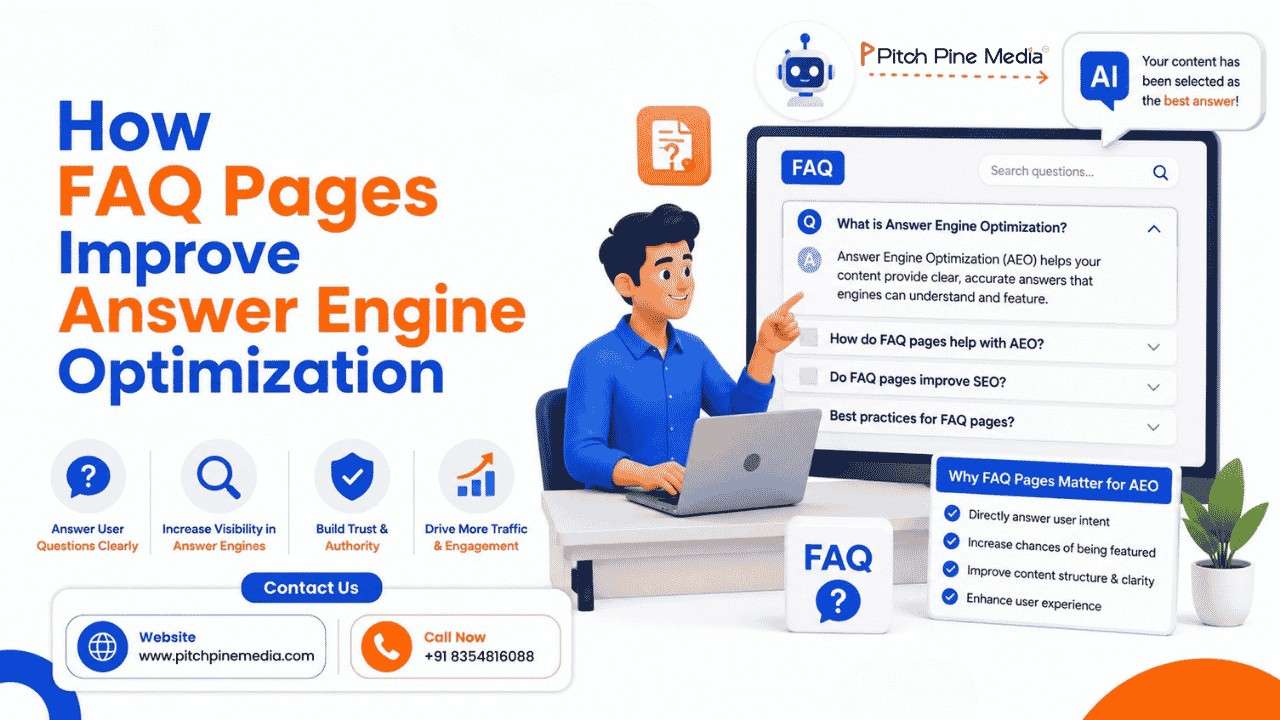
FAQ pages do more than answer basic questions. They give search systems a clean way to understand what a business knows, what it offers, and how it solves customer problems. For brands working on Answer Engine Optimization in india, this matters because AI search tools look for content that is direct, structured, and easy to quote.
Pitch Pine Media builds content with that shift in mind. FAQ pages help organize information in a format that works well for users and for answer engines. They reduce friction, remove guesswork, and make it easier for search systems to connect a question with the right response.
Why FAQ pages matter
FAQ pages function since they correspond with how people look for information. Most of the users input whole phrases into Google, AI software, and voice searchers rather than short keywords. A properly created FAQ page helps them receive the answer straightaway without having to scroll through texts.
From the standpoint of optimizing searches for AI technology, this fact is relevant because answer engines love parsable content. A pattern of question and an answer allows the algorithm to understand the main topic of the page, its contents, and where the answer to the query might be.
Moreover, FAQ pages allow companies to maintain their visibility on all search formats since one page can perform three functions at once – being organic, AI summary and featured answer page.
How FAQ pages help AEO
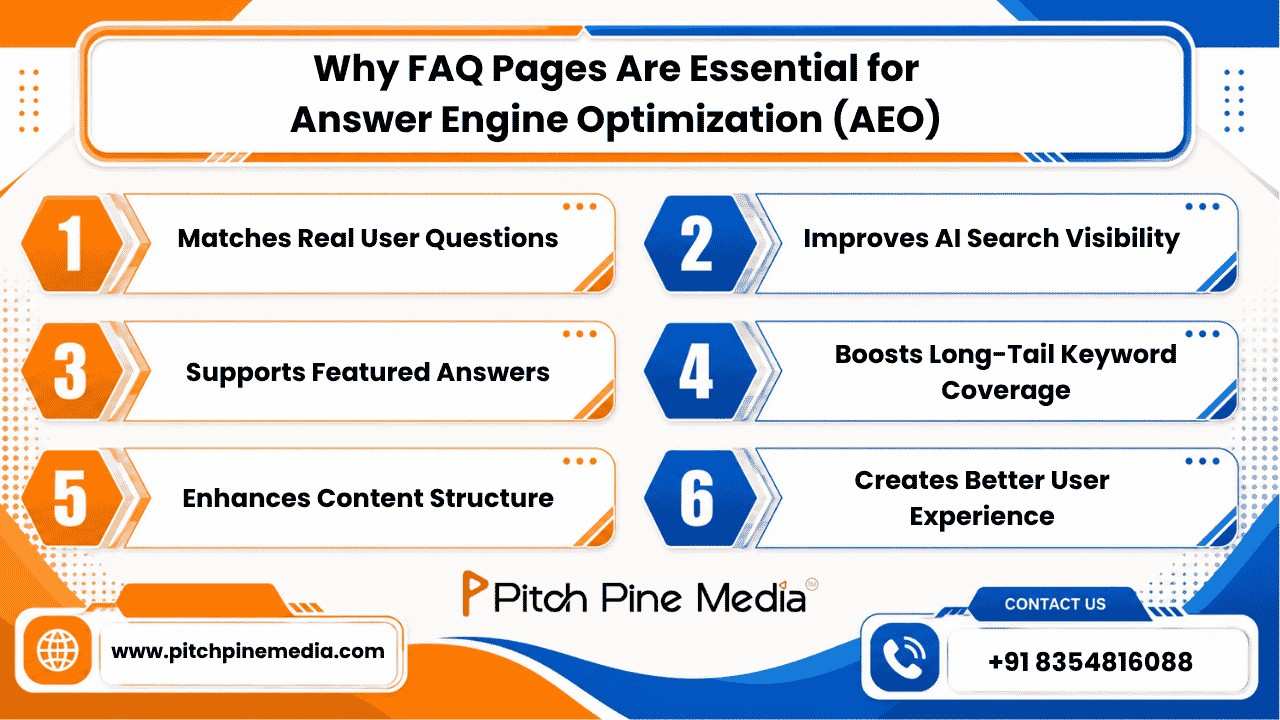
Answer Engine Optimization (AEO) is about making content easy for search systems to use as a direct answer. FAQ pages fit that goal naturally because they are already organized around user intent. Each question creates a small topic, and each answer gives a focused response.
That format helps in a few important ways.
- It keeps content clear and scannable.
- It reduces vague or filler-heavy writing.
- It gives answer engines direct text to interpret.
- It helps a page match long tail question searches.
- It improves the chance of being used in summaries or answer boxes.
For businesses targeting Answer Engine Optimization in india, FAQ pages can be one of the simplest ways to create answer-friendly content. They make the site easier to understand without adding unnecessary complexity.
FAQ pages and user intent
The intent behind a search varies from question to question. One user may seek the definition, another, the process. One may want the price, another, the geographic location of service, and yet another a comparison. An FAQ page caters to all these intentions.
An ideal FAQ page does not standardize the response to every question in the same way. While giving sufficient context to each of the questions raised, the answers should be concise. This balance is required in order to provide something useful to the user as well as the search engine.
This is one of the main reasons why FAQ pages rank well with AI-based searches. AI search optimization looks for direct responses. Hence, an FAQ page where the answers to common questions have been given will prove far easier to decipher than a general marketing page.
FAQ pages and content structure
Structure is a major part of answer engine performance. Search systems need to know where one idea ends and the next begins. FAQ pages create that separation naturally through questions and answers.
This structure also supports broader site strategy. A business can use FAQ pages to cover common service concerns, explain process details, and address location-specific questions. That makes the site more complete without forcing every topic into a long sales page.
For example, a service business can use FAQ sections to answer:
- What the service includes.
- How long the process takes.
- What areas are covered.
- When a customer should call.
- What the next step looks like.
Those are the kinds of questions answer engines like to surface. They are direct, practical, and easy to connect to real search intent.
FAQ pages and long tail search
Long tail search phrases tend to be based on questions. The individual searching might not necessarily be looking for general terms for the services they want. For instance, they might want to know the time that it will take to get a repair, what determines the price, and whether there are services in certain areas. This makes the FAQ page very useful for addressing long tail queries since each query gets an exact response.
This increases the coverage of the page without trying to cram all keywords into one paragraph. The brand is also able to address topics which cannot be included in the blogs and yet are very important for user experience. In most cases, this high intent traffic is generated through the small questions.
This is useful for Answer Engine Optimization in India where the AI search engines favor the matching responses.
Why FAQs help trust
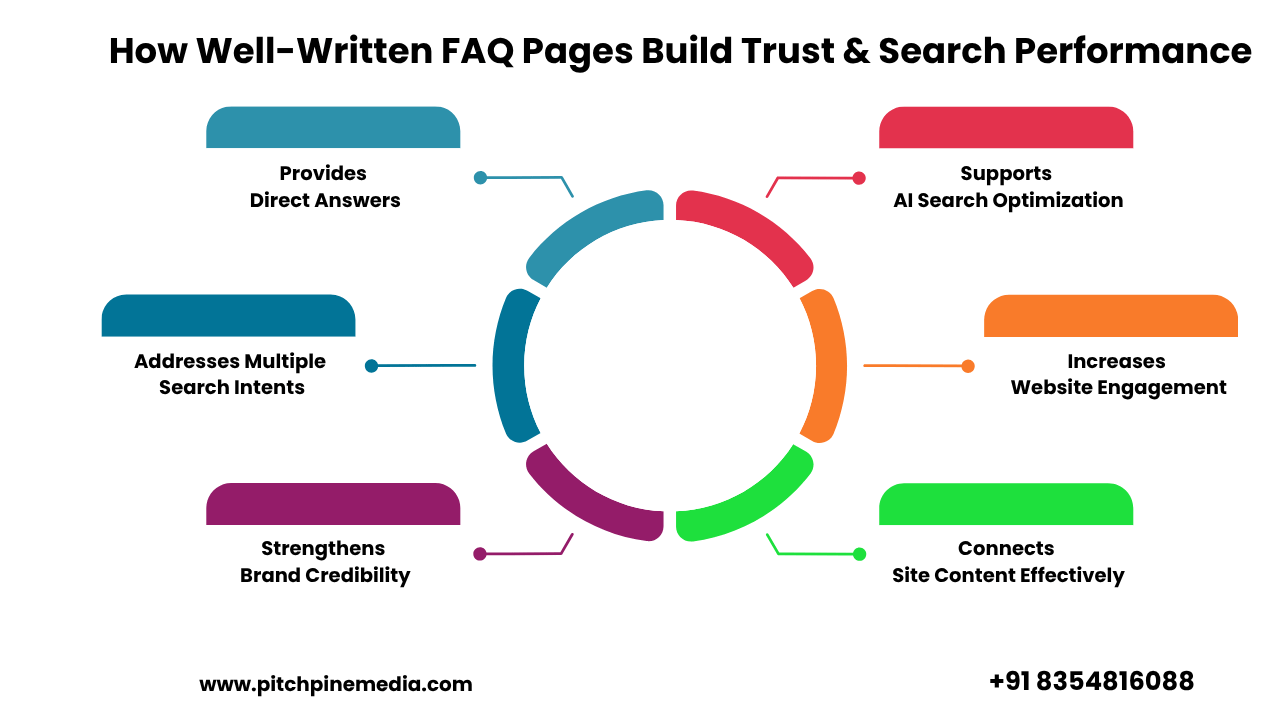
Trust matters in search, especially when people are comparing businesses or looking for service information. FAQ pages help because they answer common concerns in a straightforward way. That gives users a better sense that the business understands the subject and is willing to explain it clearly.
This is important for answer engine visibility too. Search systems tend to value content that feels useful and specific. A page that answers common questions well looks more complete than a page that only talks about the service in broad terms.
Strong FAQ pages can also reduce hesitation. When users find clear answers early, they are more likely to stay on the page, explore related content, or contact the business. That is one reason FAQ pages support both Answer Engine Optimization (AEO) and customer conversion.
How FAQ pages should be written
Not every FAQ page works well. Some are too short. Others repeat the same idea in different words. Some are written only for keywords and do not help the user at all. The best FAQ pages stay simple, specific, and useful.
Good FAQ content usually has these traits:
- One question per answer.
- Short paragraphs.
- Simple wording.
- Real information, not sales copy.
- Answers that match the question directly.
- Internal links to related pages when useful.
This style works well for AI search optimization because it gives the system clean, organized information. It also works for readers who want a quick answer without scrolling through a long page.
Where FAQ pages fit in a site
FAQ pages should not stand alone. They work best when connected to service pages, blog posts, and location pages. That creates a stronger content structure and helps search systems understand how the topics relate to one another.
A service page can explain the main offer. A blog can go deeper into one subject. An FAQ page can answer the most common support questions. Together, those pages give the website more depth and more ways to match search intent.
That approach is especially useful for businesses focused on Answer Engine Optimization in india. It gives the site more answer paths and makes the overall content easier for AI systems to interpret.
Final thought
FAQ pages improve answer engine performance because they match the way people search and the way AI systems read content. They make information easier to scan, easier to extract, and easier to trust. For brands working on AI search optimization and Answer Engine Optimization (AEO), that is a practical advantage.
Pitch Pine Media can use FAQ pages as part of a broader content strategy that supports visibility across search and AI platforms. The goal is not to add questions for the sake of structure. The goal is to answer real user concerns in a format that search systems can use. That is where FAQ pages become a useful part of modern SEO and AEO.