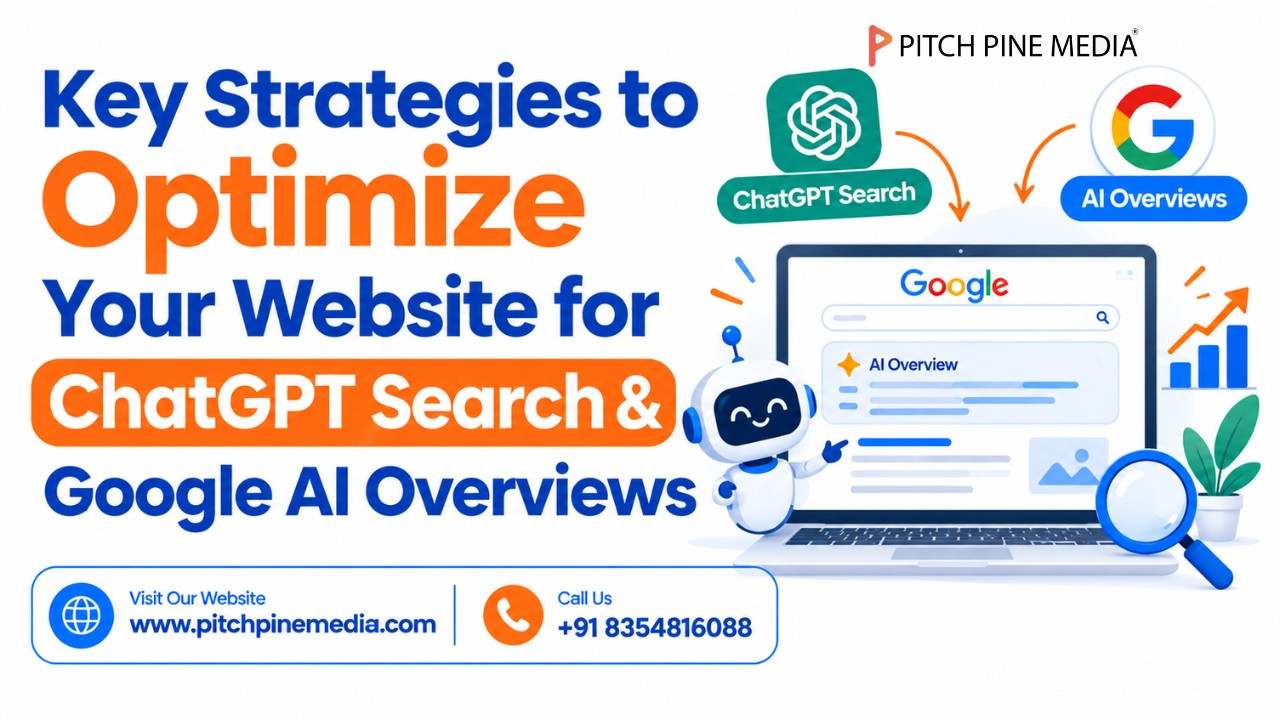


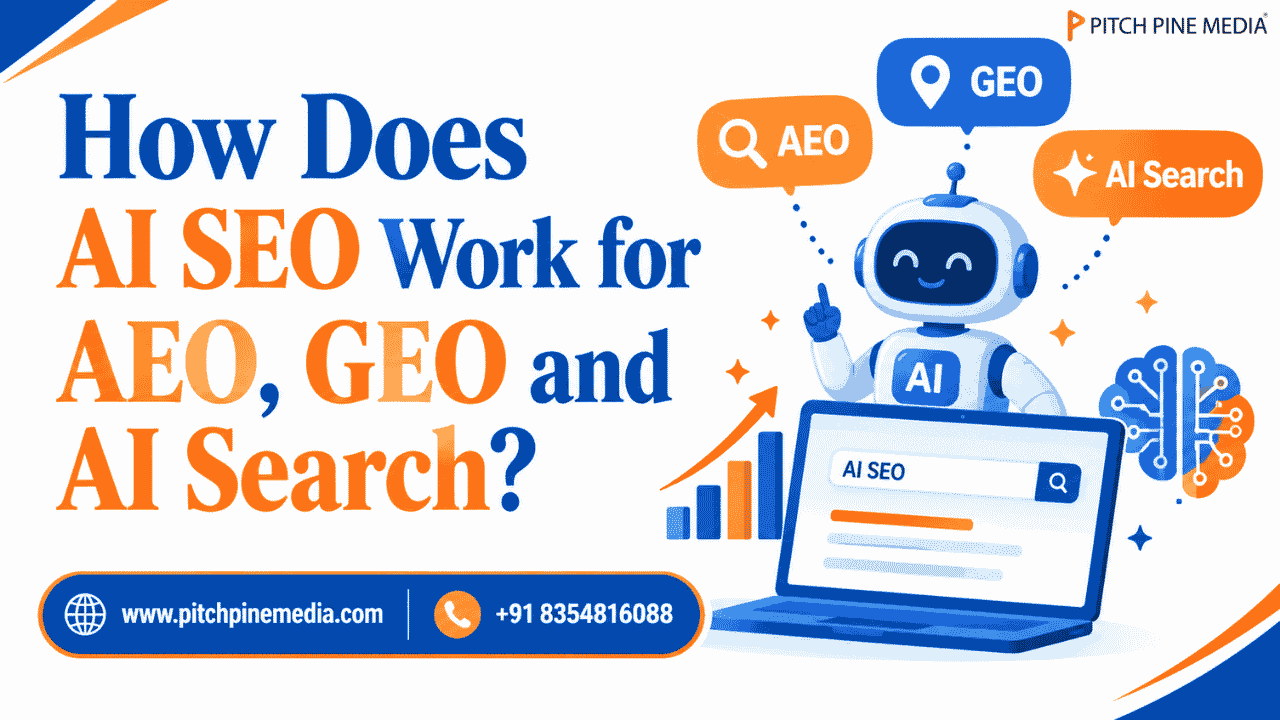
Search is no longer limited to typing a few keywords into Google and choosing a website from the results. Today, people are asking ChatGPT, Gemini, Claude and Perplexity detailed questions and expecting direct, useful answers. This shift has also increased interest in finding an AI SEO Agency in India that can help businesses improve their visibility across traditional search engines and emerging AI-powered search experiences.
For example, instead of searching only for “AI SEO agency,” someone may ask:
“What is the best AI SEO strategy for a business that wants to appear in ChatGPT and Google AI search?”
Or:
“How can I optimize my website so AI search engines understand my business?”
This change in search behavior is making AI SEO, Answer Engine Optimization (AEO) and Generative Engine Optimization (GEO) increasingly important for businesses worldwide.
What Does AI SEO Mean?
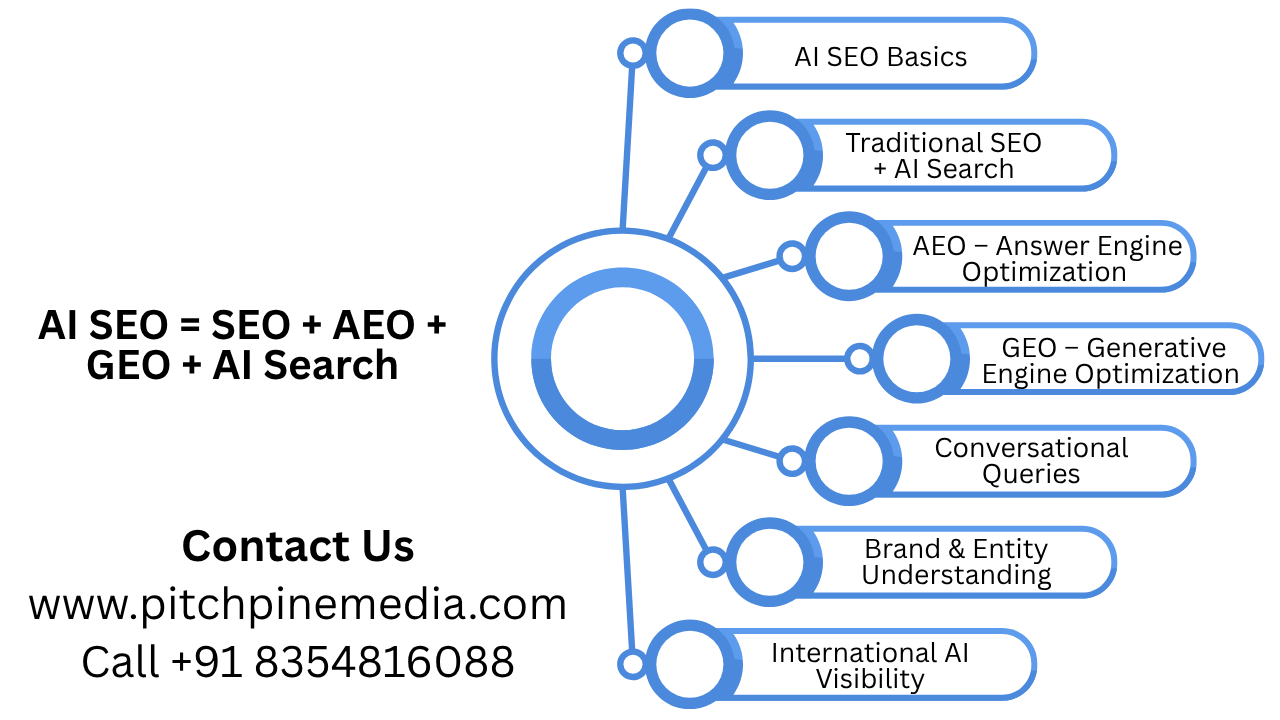
AI SEO is the practice of optimizing your website, content and overall online presence so that they are easier for both traditional search engines and AI-powered search systems to understand.
Traditional SEO still matters. However, AI search introduces another layer: your content needs to answer questions clearly, demonstrate expertise and provide enough context for AI systems to understand what your business actually does.
A modern AI SEO strategy can include:
- What Does AI SEO Mean?
- How Does AI SEO Differ From Traditional SEO?
- How Does AEO Work?
- What Does GEO Mean?
- How Does AI Search Work?
- How Can Businesses Optimize for Conversational Queries?
- How Do AI Systems Understand Brands and Entities?
- What Should Businesses Expect From AI Search?
This is especially important for businesses targeting customers in the USA, UK, Australia, Canada, UAE, France, Russia and other international markets, where users may phrase the same search need differently.
How Does AI SEO Differ From Traditional SEO?
Traditional SEO primarily focuses on improving visibility in search engine results pages. AI SEO builds on those fundamentals while also considering how AI-powered systems interpret, summarize and connect information.
For example, traditional SEO may target a search such as:
“AI SEO Agency in India”
But an AI-search user may ask:
“Which AI SEO agency in India can help a business improve its visibility across ChatGPT, Google AI and other AI search platforms?”
The second query requires content that understands the broader intent behind the search.
This means an effective AI SEO strategy should not depend only on keyword placement. It should provide context, answer related questions and demonstrate genuine expertise.
How Does AEO Work?
 AEO, or Answer Engine Optimization, focuses on making content easy for answer engines and users to understand.
AEO works particularly well with question-based searches.
For example, instead of creating a page that only targets:
AI SEO Services
you can create content that answers:
“What does an AI SEO agency actually do?”
Then provide a direct answer before expanding into more detailed information.
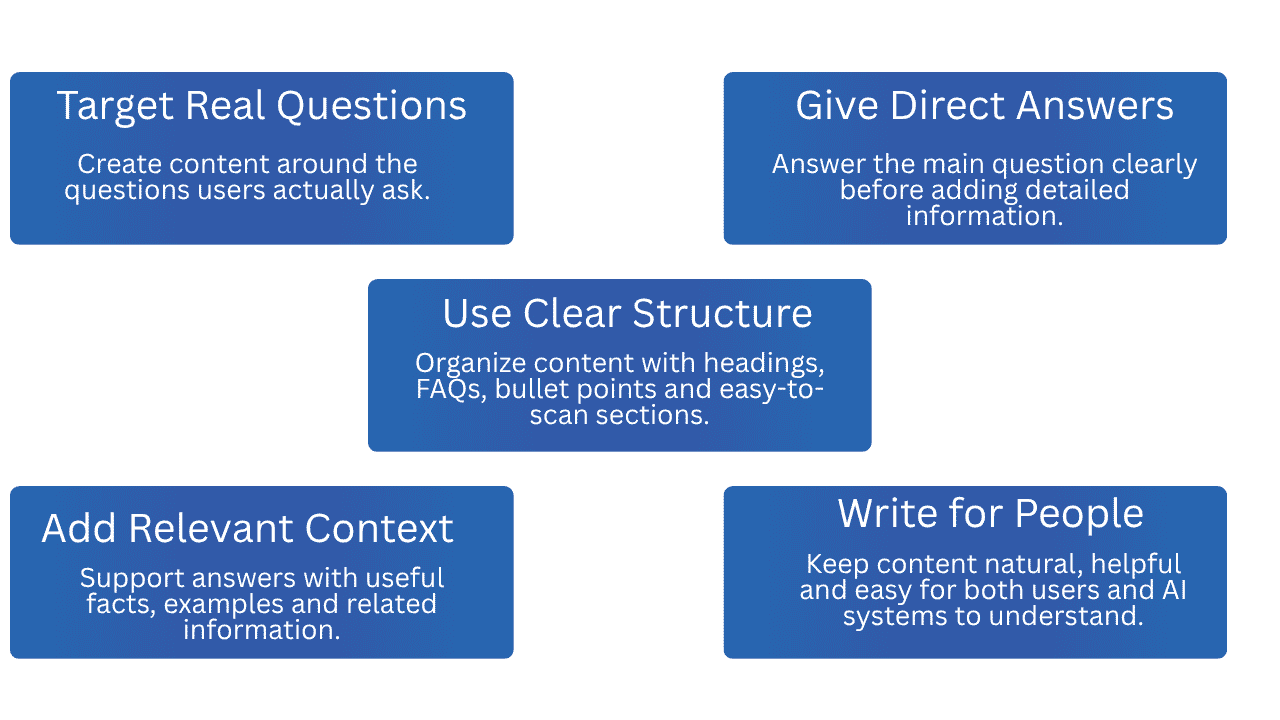
AEO content should generally be:
- Direct and easy to understand
- Structured around real questions
- Helpful and informative
- Easy to scan
- Supported by relevant context
- Written for people rather than algorithms
This type of structure can also make your content easier for AI systems to interpret.
What Does GEO Mean?
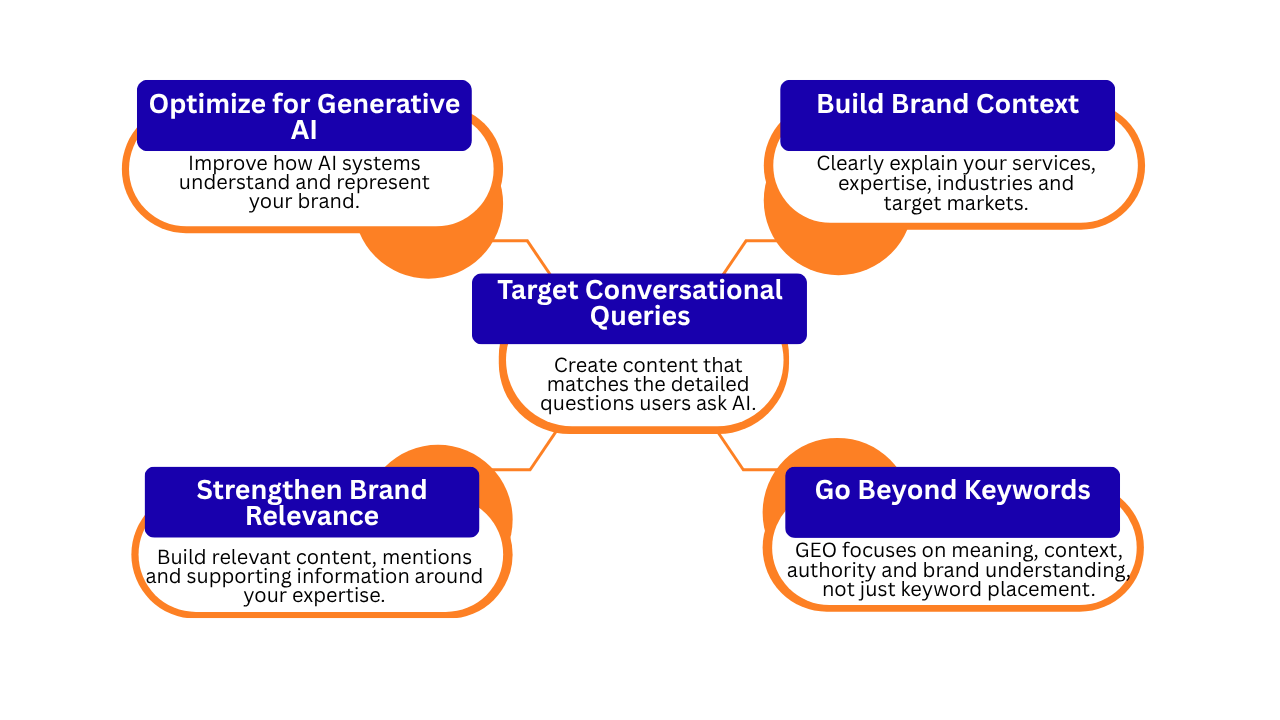
GEO, or Generative Engine Optimization, focuses on improving how a brand and its information can be understood and represented within generative AI experiences.
A traditional search result may show a website link.
A generative search experience may instead provide a complete answer and mention several companies, sources or brands within that answer.
For example, a user could ask:
“What are the best AI SEO agencies in India for international businesses?”
For a business to become relevant to such a query, its website needs to clearly communicate its expertise, services, industries, markets and areas of specialization.
GEO therefore goes beyond simply adding keywords to a page.
How Does AI Search Work?
AI search can understand natural-language questions and may combine information from different sources to generate an answer.
Someone might ask ChatGPT:
“How can I improve my website visibility in AI search?”
Or ask Perplexity:
“What are the most effective strategies for GEO and AEO?”
Or ask Gemini:
“What should a business do to prepare its website for AI-powered search?”
These searches are different from traditional keyword searches because they often contain more context and specific intent.
This means your content should provide enough information for search systems to understand:
- What your business does?
- What services do you provide?
- Who are your customers?
- Which industries do you serve?
- Which locations or markets do you target?
- What topics demonstrate your expertise?
- What problems do your services solve?
How Can Businesses Optimize for Conversational Queries?
One of the biggest changes in modern search is the move toward conversational queries.
Instead of searching:
AI SEO
a user may ask:
“How can AI SEO help my business appear in ChatGPT search results?”
Instead of searching:
GEO services
they may ask:
“What does GEO do for a business that wants more visibility in generative AI search?”
These longer questions reveal much more about the user’s intent.
Businesses can create content around these conversational searches by answering questions such as:
- How Does AI SEO Work?
- How Can AI SEO Improve Website Visibility?
- How Can Businesses Optimize for ChatGPT?
- What Is AEO in Digital Marketing?
- What Is GEO in SEO?
- How Does GEO Help With AI Search?
- Can Small Businesses Benefit From AI SEO?
- How Can Brands Get Mentioned in AI Search?
- How Does AI Search Choose Information?
- How Can Content Become More Visible in AI-Generated Answers?
This approach helps build topical depth instead of creating content around one keyword repeatedly.
How Do AI Systems Understand Brands and Entities?
AI systems need context to understand what a company is, what it offers and why it may be relevant to a particular question.
For example, if a business wants to be recognized as an AI SEO Company in India, its website should clearly explain its AI SEO services, SEO expertise, AEO and GEO capabilities, industries served and target markets.
Brand information should also remain consistent across the company’s website and other credible online sources.
Businesses should make it clear:
- Who Is the Company?
- What Services Does the Company Provide?
- Which Markets Does the Company Serve?
- Which Industries Does the Company Understand?
- What Subjects Does the Company Have Expertise In?
- How Do the Company’s Services Solve Customer Problems?
This creates stronger entity clarity and helps both users and search systems understand the business.
What Should Businesses Expect From AI Search?
Businesses should not expect AI search to work exactly like traditional Google rankings.
A website may rank well for one keyword but may not automatically be mentioned in every AI-generated response related to that topic.
AI-generated answers can vary depending on:
- The user’s exact question
- Search intent
- Location
- Context
- Available sources
- The AI platform being used
- The information available to the system
Therefore, businesses should focus on building strong overall visibility and authority rather than trying to manipulate one specific AI response.
The goal should be to create a website that is useful to people and easy for search engines and AI systems to understand.
How Can Small Businesses Generate More Leads With AI SEO?
A common misconception is that AI SEO is only useful for large companies.
In reality, small businesses can use AI SEO to target highly specific customer questions.
For example, someone might ask:
“Which digital marketing agency can help a small business generate leads using AI SEO?”
If your website has genuinely useful content explaining lead generation, SEO, AEO, GEO and AI search, you have an opportunity to become relevant to that broader topic.
Businesses can learn more about this approach through How Small Businesses Can Generate More Leads with AI SEO.
The important thing is to focus on the customer’s problem rather than simply producing content around keywords.
How Can AEO Help With AI Search?
AEO is particularly useful when people search using questions.
Instead of writing only:
AI SEO Services
you can answer:
“What does an AI SEO agency actually do?”
Then provide a concise answer before expanding into detailed information.
This structure is useful for both people and search systems because the question is clearly defined and the answer is easy to identify.
AEO content should generally be:
- Direct
- Factual
- Well structured
- Easy to scan
- Written around genuine questions
- Supported by useful context
How Can GEO Help a Brand Get Found in AI Search?
GEO takes the idea further by considering how generative AI systems understand a brand and its expertise.
Consider a user asking:
“Who provides AI SEO services for businesses in India targeting international markets?”
For your brand to be relevant to such a query, your website should clearly communicate your services, expertise, industries, locations and areas of specialization.
This is where brand consistency and entity clarity become important.
GEO is therefore not simply about inserting keywords. It is about building a stronger, clearer digital representation of your brand.
How Can Businesses Build a Strong AI SEO Content Strategy?
A practical AI SEO strategy should begin with your audience.
First, identify what your potential customers are asking.
Then create content that answers those questions comprehensively.
Next, connect related pages through natural internal links and build topical depth around your most important subjects.
For example, an AI SEO topic cluster could include:
AI SEO → AEO → GEO → ChatGPT SEO → AI Search → Google AI Overviews → Conversational Search → AI SEO Services
This creates a connected information ecosystem rather than a collection of unrelated blog posts.
For a business targeting international customers, the same strategy can then be adapted to different industries and search intents without creating thin or repetitive content.
How to Choose the Right AI SEO Agency in India?
If you are considering an AI SEO Agency in India, don’t choose an agency simply because it promises to “rank your website in ChatGPT.”
Ask how the agency approaches:
- AI SEO
- Traditional SEO
- AEO
- GEO
- Content strategy
- Technical SEO
- Topical authority
- Entity optimization
- Internal linking
- International SEO
- AI-search visibility
For businesses targeting multiple countries, the agency should also understand how search intent changes between markets.
You can also read How to Choose the Right AI SEO Agency in India to understand what to evaluate before selecting an agency.
If you are comparing agencies based on experience, strategy and global search capabilities, you may also find Best AI SEO Agency in India for Global Businesses useful.
Final Thoughts
The biggest change in search is not simply that AI is producing answers. It is that people are changing the way they ask questions.
Instead of searching only for:
“AI SEO Agency in India”
a potential customer might ask:
“Which AI SEO agency in India can help my business improve visibility across ChatGPT, Google AI and other AI search platforms?”
That is the type of search behavior businesses need to understand.
A successful AI SEO strategy should therefore combine SEO, AEO and GEO while focusing on real questions, useful answers, topical authority and clear brand information.
The goal is not to write content that sounds like it was created for an algorithm. The goal is to create content that a person would genuinely find useful, and that search engines and AI systems can clearly understand.
That is the foundation of sustainable visibility in the next generation of search.
Frequently Asked Questions
Q. How can I get my website to appear in ChatGPT search?
Ans: There is no guaranteed method for getting a website mentioned in ChatGPT. However, publishing useful, authoritative and clearly structured information can strengthen your overall visibility across search and AI-powered discovery systems.
Q. How does ChatGPT decide which websites to mention?
Ans: The answer can depend on the specific ChatGPT experience, query, available information, search capabilities and other factors. Businesses should focus on creating accurate, useful and clearly attributable information rather than trying to manipulate a single ranking signal.
Q. Can I rank my website on ChatGPT with AI SEO?
Ans: AI SEO can help improve a website’s readiness for AI-powered search and discovery, but there is no guaranteed ChatGPT ranking position. AI responses can vary by query, context and platform.
Q. What is the best AI SEO strategy for ChatGPT?
Ans: A strong strategy includes useful content, topical authority, clear answers, technical SEO, entity clarity, natural internal linking and content built around the real questions your audience asks.
Q. How do I optimize my website for Perplexity?
Ans: Focus on clear, factual and well-structured content, strong topical coverage, technical accessibility and credible information. There is no single optimization technique that guarantees a particular result in Perplexity.
Q. How can I optimize my website for Google AI Overviews?
Ans: Continue following strong SEO fundamentals while creating helpful, well-structured content that directly answers user questions and provides useful supporting information. There is no separate technique that guarantees inclusion in an AI Overview.
Q. Is GEO better than SEO?
Ans: GEO does not replace SEO. SEO, AEO and GEO address different but overlapping aspects of modern search visibility. A combined strategy can be more useful for businesses adapting to AI-powered search.
Q. What is AEO in AI SEO?
Ans: AEO, or Answer Engine Optimization, is the practice of structuring content around questions and providing clear answers that can be easily understood by answer engines and users.
Q. What is GEO in digital marketing?
Ans: GEO, or Generative Engine Optimization, focuses on improving how a brand and its information can be understood and represented within generative AI search experiences.
Q. How can I make my content visible in AI search?
Ans: Create genuinely useful content that directly answers user questions, demonstrates expertise, covers a topic comprehensively and maintains strong technical and structural SEO fundamentals.
Q. Can AI SEO help a small business get more leads?
Ans: Yes. Small businesses can use AI SEO to target specific customer questions, build topical authority and attract people looking for detailed solutions. Visibility alone is not enough; landing pages and conversion-focused content are also important.
Q. Does AI SEO work for international businesses?
Ans: Yes. AI SEO can support businesses targeting markets such as the USA, UK, Australia, Canada, UAE, France and Russia by creating content around relevant questions, industries, services and regional search intent.
Q. Will AI SEO replace traditional SEO?
Ans: AI SEO is unlikely to make traditional SEO irrelevant. Technical SEO, crawlability, useful content, authority, links, site structure and search intent remain important foundations for online visibility.