

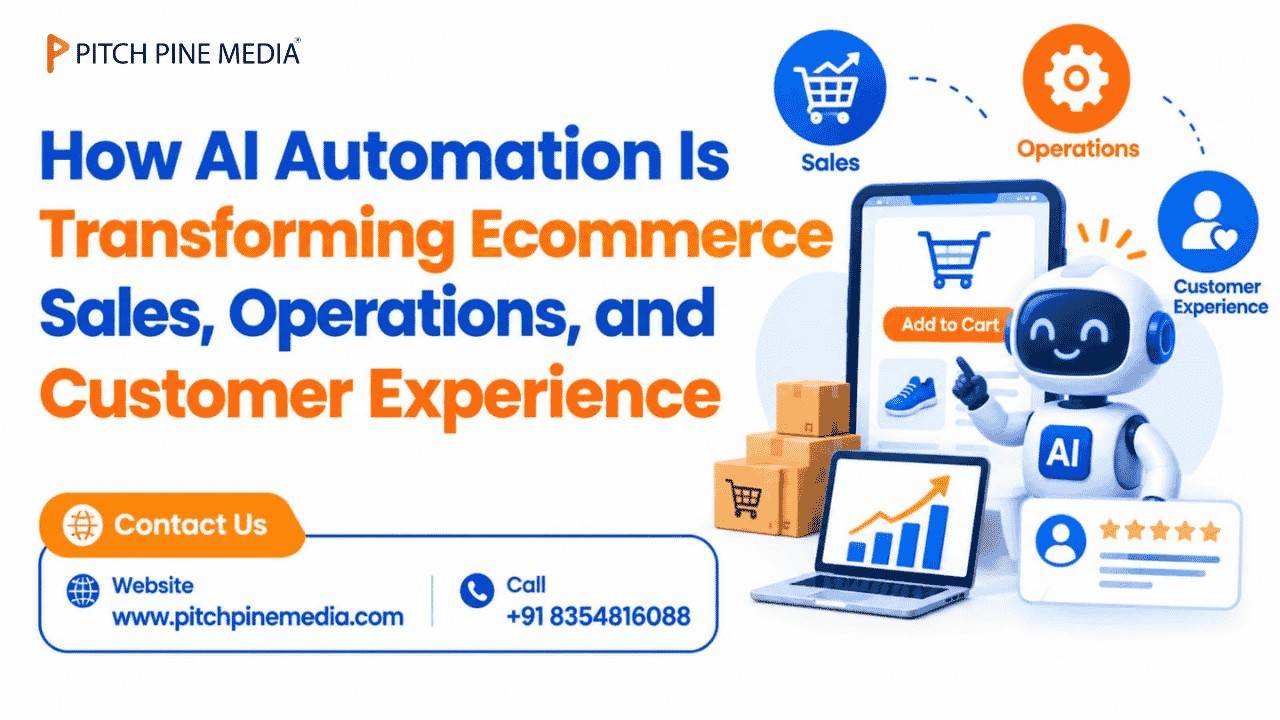
If you’ve noticed customers finding your store through an AI chatbot recommendation instead of a Google search, or you’ve started relying on automated tools to handle inventory and support tickets that used to eat up your whole day, you’re already living inside this shift. AI automation is changing ecommerce at nearly every layer, how products get discovered, how stores run day to day, and how customers actually get helped. Here’s what’s genuinely changing, and why ecommerce GEO has become just as important as your product pages themselves.
Why This Shift Is Happening Now
For years, ecommerce success depended almost entirely on traditional search rankings and paid ads. That’s no longer the full picture. A growing share of shoppers now ask AI assistants directly, “what’s the best budget blender,” “where can I find a durable backpack for hiking,” and act on whatever the AI recommends, often without ever visiting a traditional search results page at all. At the same time, AI automation tools have matured enough to genuinely handle operational work that used to require a full team, inventory forecasting, customer support triage, personalized product recommendations, all running quietly in the background.
Put together, these two shifts mean stores now need to be discoverable by AI systems and efficient enough to keep up with customer expectations shaped by instant, automated experiences elsewhere.
AI Automation in Sales and Product Discovery
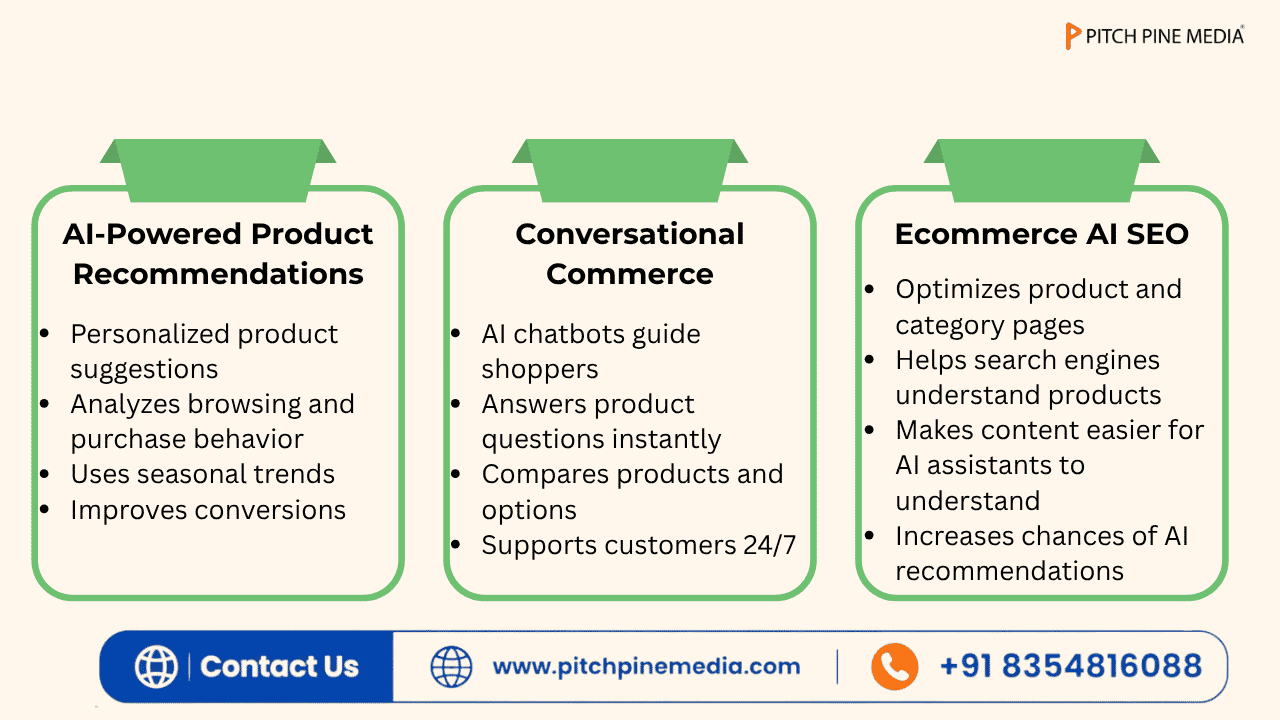
AI-Powered Product Recommendations Modern recommendation engines have moved well past “customers who bought this also bought that.” Today’s systems analyze browsing behavior, purchase history, and even seasonal trends in real time to surface genuinely relevant products, which directly improves conversion rates without needing a human to manually curate every suggestion.
Conversational Commerce AI chatbots and voice assistants now handle a meaningful share of product discovery, answering specific questions, comparing options, and guiding customers toward a purchase the same way a knowledgeable in-store employee once would, except available at 2am on a Tuesday.
Ecommerce AI SEO This is where AI SEO comes into play directly. Product pages, category pages, and content need to be structured so both traditional search engines and AI assistants can accurately understand what’s being sold, who it’s for, and why it’s a good fit, not just for ranking purposes, but for actually getting recommended when an AI system is answering a shopper’s question.
AI Automation Behind the Scenes: Operations
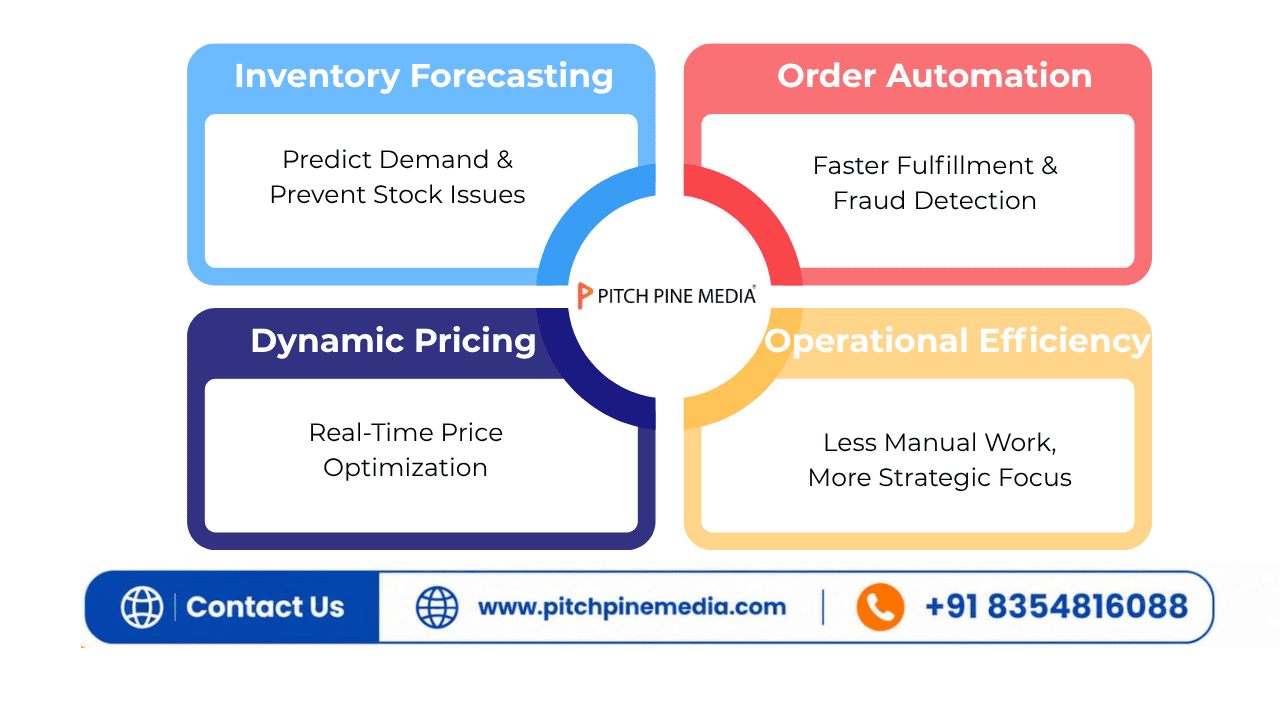 Inventory and Demand Forecasting AI models can now predict demand shifts based on historical sales, seasonality, and even external factors like weather or trending topics, helping stores avoid both stockouts and overstock without a team manually crunching spreadsheets every week.
Automated Order and Fulfillment Management From automatically routing orders to the nearest warehouse to flagging unusual order patterns that might indicate fraud, automation has quietly taken over a lot of the operational grunt work that used to require constant manual oversight.
Dynamic Pricing Some stores now use AI to adjust pricing in real time based on demand, competitor pricing, and inventory levels, a level of responsiveness that simply wasn’t practical to manage manually before.
Businesses exploring AI automation for ecommerce stores are generally looking to reduce the operational overhead that used to require significant headcount, freeing up teams to focus on strategy rather than repetitive daily tasks.
AI Automation and the Customer Experience
24/7 Customer Support AI-powered support tools now handle a large share of routine questions, order status, return policies, sizing guidance, instantly and without wait times, while routing genuinely complex issues to human agents who can actually solve them properly.
Personalized Marketing at Scale Email and ad campaigns can now be personalized down to the individual shopper, adjusting messaging and offers based on browsing behavior, rather than sending the same generic promotion to an entire list.
Faster, Smarter Checkout AI-driven fraud detection and streamlined checkout flows have reduced friction at the exact moment it matters most, right before a customer decides whether to actually complete a purchase or abandon their cart.
Why Ecommerce GEO Matters More Than Ever
As more shoppers rely on AI assistants for product research and recommendations, ecommerce GEO, Generative Engine Optimization built specifically for online stores, has become essential rather than optional. This works hand in hand with ecommerce AI SEO more broadly: unlike traditional SEO, which focuses on ranking a page in search results, this newer approach focuses on making sure AI systems can accurately understand, trust, and recommend your products when a shopper asks a relevant question.
This means structuring product data clearly, using schema markup so AI systems can parse specifications accurately, maintaining consistent product information across your site and third-party listings, and publishing genuinely helpful content, buying guides, comparisons, FAQs, that AI systems can pull from confidently. Stores that ignore this risk becoming invisible in an increasingly AI-mediated shopping journey, even if their traditional SEO is technically solid.
What This Actually Looks Like in Practice
It helps to picture this concretely rather than as an abstract concept. Say a shopper asks an AI assistant, “what’s a good waterproof jacket for hiking in the rain.” A store with strong ecommerce AI SEO has product pages that clearly state materials, waterproof ratings, and use cases in plain language, structured data that lets an AI system confidently extract those specs, and supporting content, like a buying guide comparing waterproof ratings, that reinforces the store’s expertise on the subject. A store without this groundwork might have a perfectly good jacket in stock, but the AI system simply has nothing solid to work with, so it recommends a competitor instead.
This is really the practical difference ecommerce GEO makes: it’s not about tricking an AI system into recommending you, it’s about giving it enough clear, structured, trustworthy information to confidently do so.
Common Mistakes Businesses Make With AI Automation
A few patterns tend to hold ecommerce businesses back from getting real value out of automation:
- Automating without clean data first, since AI tools are only as good as the product and customer data feeding them
- Treating AI SEO and traditional SEO as separate strategies, rather than building one cohesive approach that supports both
- Over-automating customer support, removing human escalation paths for genuinely complex issues that frustrate customers further
- Ignoring ecommerce GEO entirely, assuming traditional search rankings alone are still enough to drive discovery
- Adopting automation tools without a clear strategy, leading to disconnected systems that don’t actually talk to each other
Getting Started With AI Automation the Right Way
The businesses seeing real results from AI automation typically start small and strategic, automating one clear bottleneck first, customer support, inventory forecasting, or product recommendations, before expanding further. Pairing that operational work with a genuine ecommerce AI SEO strategy ensures the traffic and visibility gains keep pace with the efficiency improvements happening behind the scenes, rather than one moving ahead of the other and creating a mismatch between how efficiently a store runs and how easily customers can actually find it.
It’s worth resisting the urge to automate everything at once. A phased approach, measuring the impact of each change before layering on the next, tends to produce far more reliable results than switching an entire operation over to AI-driven systems in one go.
How Pitch Pine Media Supports Ecommerce Businesses
At Pitch Pine Media, we work with ecommerce businesses on exactly this intersection, combining ecommerce SEO and platform-specific strategies like Shopify SEO with broader Generative Engine Optimization built for how AI systems now influence shopping decisions. You can also explore how content strategy drives ecommerce sales, or see our broader take on digital marketing solutions for 2026 for more context on where the industry is heading.
Final Thoughts
AI automation isn’t a future trend for ecommerce businesses to prepare for someday, it’s already reshaping how stores sell, operate, and support customers right now. The businesses that adapt, both operationally and through a real ecommerce GEO strategy, are the ones that will keep showing up in front of customers, whether those customers are typing into a search bar or asking an AI assistant directly.
If you’re ready to make sure your store is discoverable and efficient in this new landscape, get in touch with Pitch Pine Media to talk through where your ecommerce business currently stands.