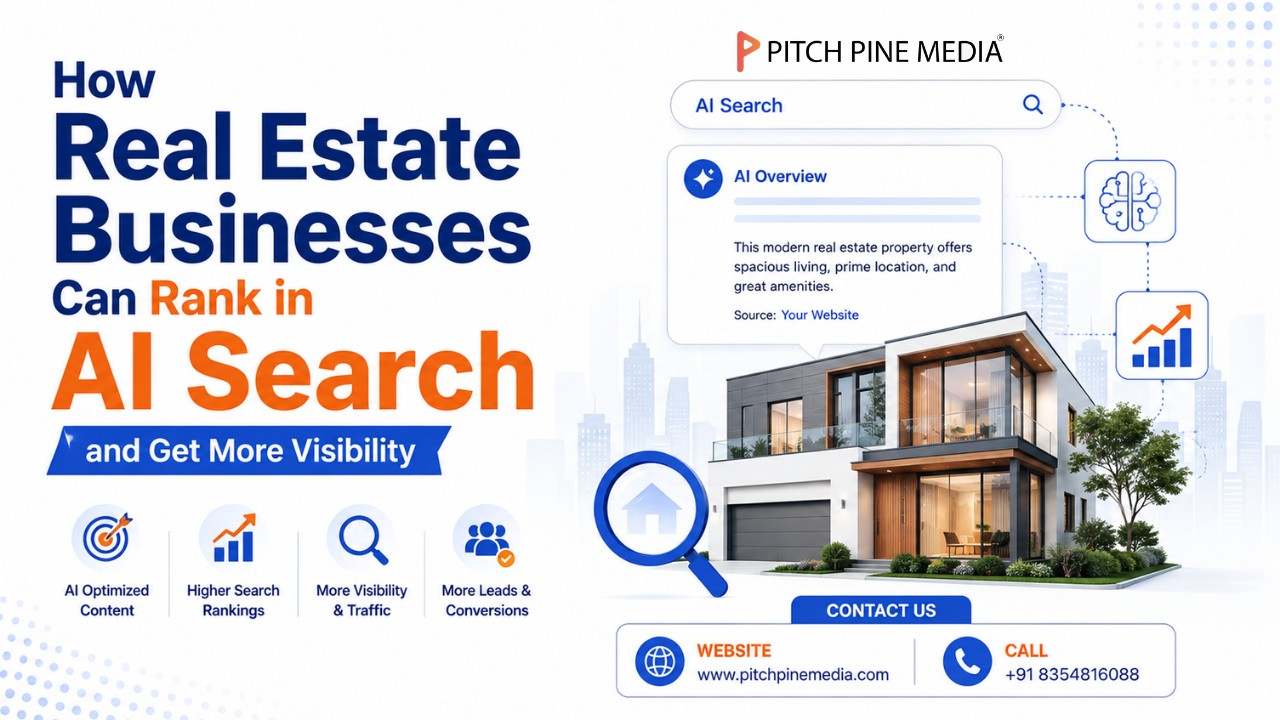



Search is no longer just about ranking on Google. In many cases, users don’t even visit websites; they get their answers directly from featured snippets or AI-generated summaries.
This shift has changed how content needs to be written and structured. If your content isn’t aligned with this format, it may still rank, but it won’t get maximum visibility.
That’s where AI search optimization India strategies and AEO (Answer Engine Optimization) come into play. Instead of focusing only on rankings, the focus moves toward becoming the actual answer users see first.
What Is AEO and Why It Matters Now
AEO is about preparing your content in a way that search engines and AI systems can easily extract and display as direct answers.
Instead of focusing only on rankings, it focuses on:
- Clear, structured answers to specific queries
- Context that AI tools can understand quickly
- Content that matches real user intent, not just keywords
When done right, your page can appear in:
- Featured snippets (position zero)
- “People also ask” sections
- AI-generated summaries (like Google SGE or other AI search tools)
Many businesses offering Answer Engine Optimization (AEO) services in India are now shifting strategies from traditional SEO to this more intent-driven approach.
How Featured Snippets Actually Work
Featured snippets are selected pieces of content that directly answer a user’s query. They usually appear at the top of the search results.
Content that gets picked typically follows a few patterns:
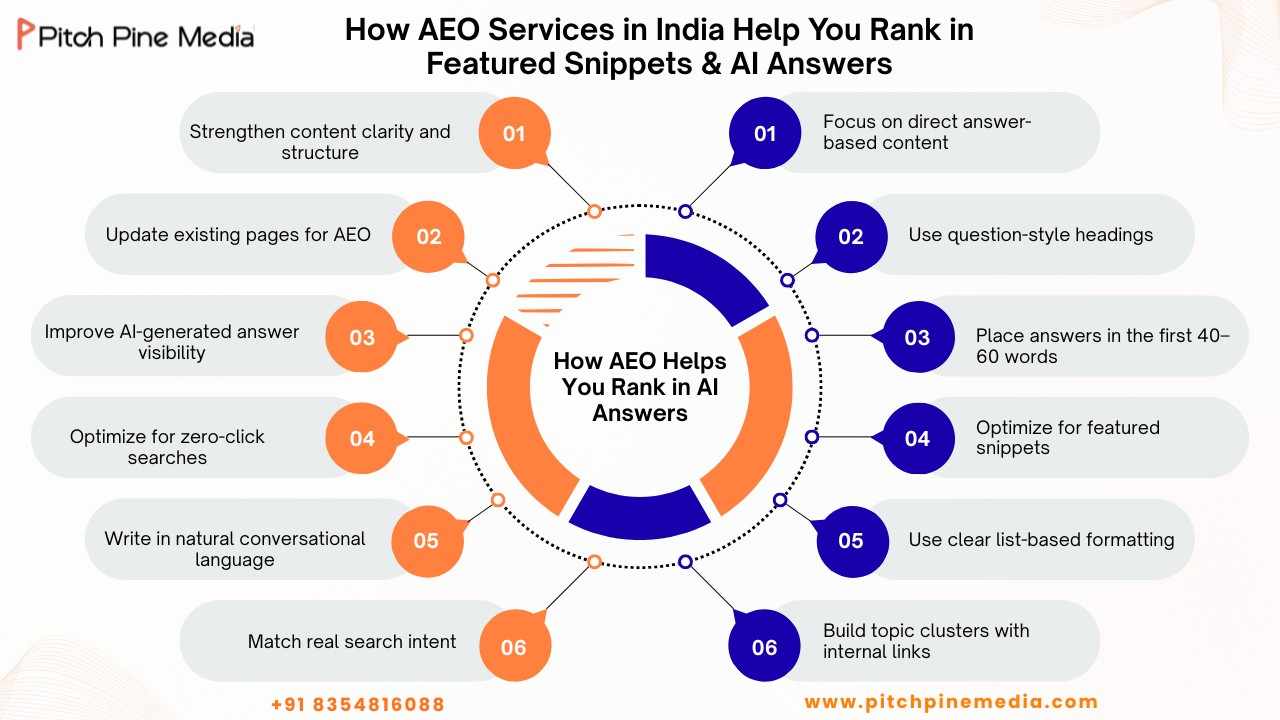
- A clear question-based heading
- A direct answer immediately after the heading
- Concise explanation (usually 40–60 words)
- Structured formatting like lists or steps
One common issue is that many blogs delay the answer. Long introductions might work for storytelling, but they reduce your chances of getting featured.
How AI Answers Select Content
AI-generated answers work differently. They don’t rely on a single source. Instead, they combine information from multiple pages.
To appear in AI answers, your content should:
- Cover the topic in depth
- Maintain consistency across related pages
- Use natural, conversational language
- Avoid overly complex or keyword-heavy writing
This is where a lot of websites struggle. They create isolated blog posts instead of building a connected content structure.
Where Most Websites Go Wrong
Even good content often fails to appear in snippets or AI answers. The issue is usually not the quality of its structure.
Some common problems include:
- Writing long introductions without answering the query
- Using generic headings that don’t match search intent
- Overloading content with keywords but lacking clarity
- Keeping paragraphs too dense and hard to scan
In many projects, fixing these issues leads to better visibility without creating entirely new content.
A Practical Framework for AEO
AEO doesn’t need to be complicated. A simple structure can improve your chances significantly:
- Start with a clear query-based heading
Example: “How to optimize content for AI search?” - Add a direct answer right below it
Keep it short and specific - Expand with supporting details
Explain the concept in simple terms - Use lists or steps where relevant
This improves readability and extraction - Link related topics internally
Build context and authority across pages
This format aligns well with how search engines process and display information.
The Role of Experience and Local Understanding
AEO is not one-size-fits-all. Search behavior varies across regions and industries.
In India, for example:
- Users often search in conversational phrases
- Mobile searches dominate
- Mixed-language queries (English + regional language) are common
Teams working on AI search optimization India projects often adapt content based on these patterns.
Different industries also require different approaches. A SaaS company, a healthcare provider, and a local service business will all have different search intentions even if the topic overlaps.
How This Works in Real Projects
In practical scenarios, AEO is often applied by improving existing content rather than starting from scratch.
Typical changes include:
- Rewriting key sections into direct answers
- Breaking long paragraphs into smaller sections
- Updating headings to match real search queries
- Strengthening internal linking
At Pitch Pine Media, this approach is used across different project types. Instead of focusing only on publishing new content, the emphasis is on making existing pages more aligned with how users search and how search engines interpret answers.
This not only improves visibility but also enhances overall content usability.
What the Future of Search Looks Like
Search engines are moving toward faster, more direct responses. AI integration will continue to grow, and zero-click searches are likely to increase.
Content that performs well in this environment usually:
- Answers questions clearly
- Uses a structured format
- Covers topics consistently across multiple pages
Websites that adapt early will have a clear advantage.
Final Thoughts
AEO is not about replacing SEO or following a completely new system. It’s about refining how content is presented.
If your content already ranks but isn’t appearing in featured snippets or AI answers, the issue may not be quality, it’s often structure and clarity.
By focusing on intent, improving formatting, and building topical depth, businesses can improve their chances of being featured where users are actually looking.
For agencies like Pitch Pine Media, this shift offers an opportunity to move beyond basic optimization and focus on how content performs in real search scenarios where visibility is no longer limited to rankings alone.