

Schema has become one of the most valuable aspects of current search practices. It provides a better understanding of what a particular webpage means, whom it is aimed at, and the way its information relates to a greater topic. This issue becomes crucial in Generative Engine Optimization, as the visibility of a website depends on how well it is understood by an AI-powered engine.
For businesses that want stronger placement in AI summaries and search answers, schema is not a side task. It is part of the structure that supports discovery. Pitch Pine Media uses schema as part of a larger visibility strategy that also includes content clarity, page intent, and technical SEO. When these pieces work together, the site becomes easier to understand and easier to surface.
What schema markup does
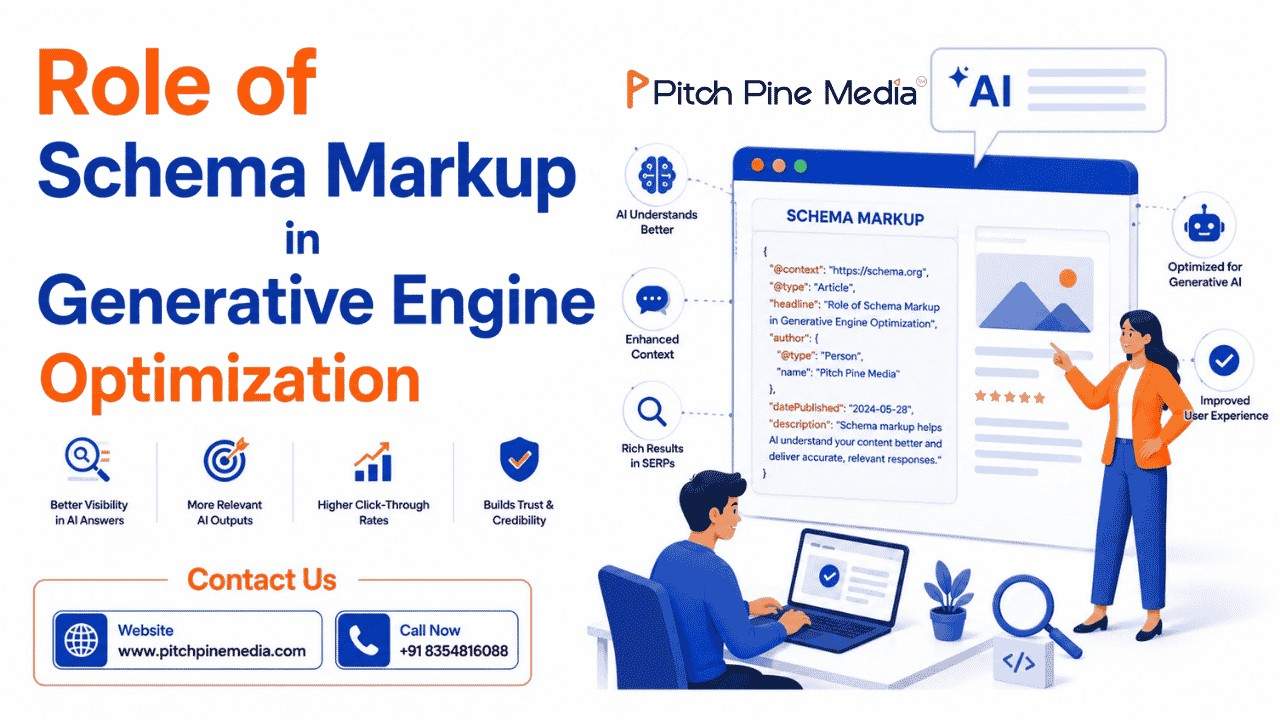
The schema markup is structured data embedded into the page to allow the search engines to understand its contents. With the help of such structured data, the search engines will be able to understand if the page talks about a service, company, place, product, person, or something else. That makes it easier for the search engines to associate the page with the corresponding type of query and corresponding group of topics.
In Generative Engine Optimization, that clarity matters because AI systems often pull from pages that are easy to parse and trust. Schema does not force rankings, but it gives the page a cleaner signal. It reduces guesswork. That is useful for businesses investing in AI Search Optimization because the goal is not only to be found, but to be understood correctly.
Why schema matters for GEO
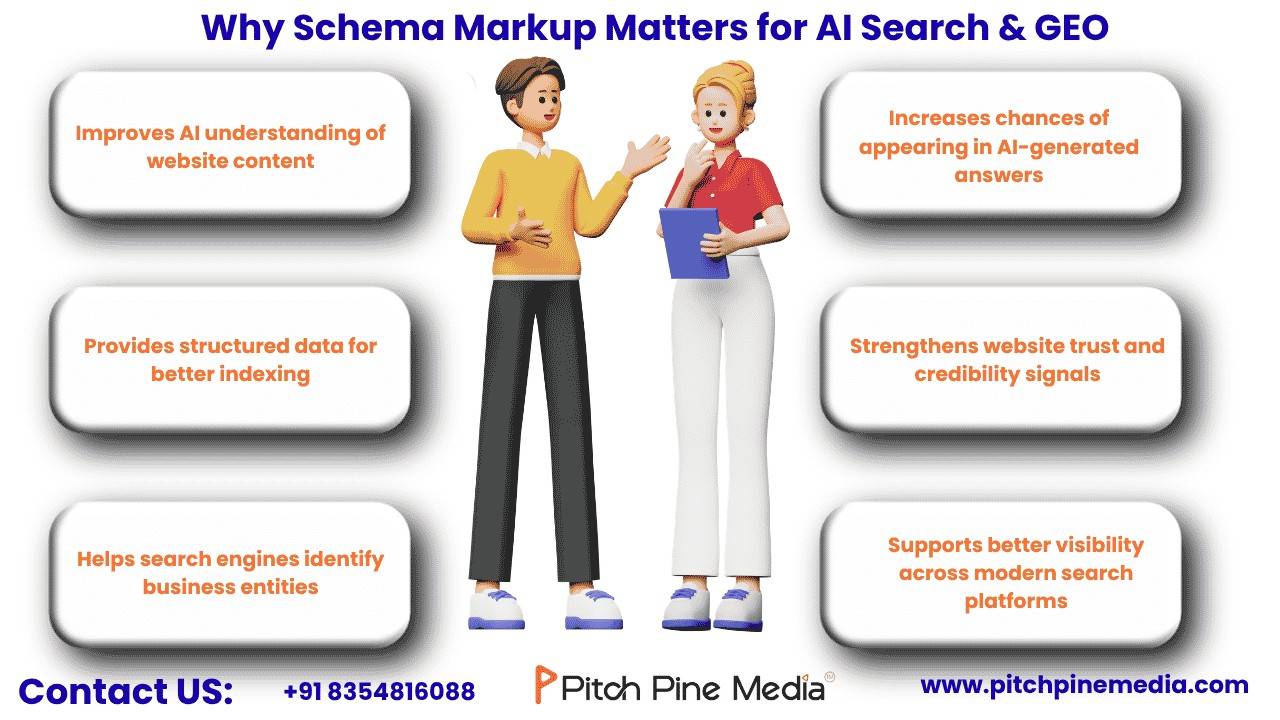
Search engine systems don’t treat all web pages equally. There are certain elements they seek that would help them recognize what type of web page it is, its credibility and if it suits the search query. In this context, schema markup is essential because it offers machine readable context and makes the process of recognition much easier.
This is why schema becomes an important tool in GEO Services. If the webpage uses schema properly, it will be easier to classify and can increase its use in answer generation processes. For those who need to stand out among many others in the market, it might make the difference. It serves the larger purpose of AI Visibility Optimization.
Schema and answer engines
Answer engines favor content which is structured and easy to pull out from the page. Schemas help by adding labels to important components of the website, which machines can process easily. This does not mean that writing becomes less important, but the chances that relevant information will be found and used improve.
For service businesses, this can affect how the brand appears in AI summaries, local search responses, and generated answer results. A clear service page with schema gives the system a better picture of what the business does and where it operates. That is one reason AEO Services and schema often work together. The better the page structure, the easier it is for answer engines to use the content confidently.
Schema types that support GEO
Not every schema type is useful for every page. The right markup depends on the page goal and the business model. A local service business may need a different setup than an ecommerce brand or a content site. The point is to match the structured data to the real purpose of the page.
Common schema types that support Generative Engine Optimization include:
- Organization schema for brand identity.
- Local Business schema for location and service area clarity.
- Service schema for specific offerings.
- FAQ schema for concise question and answer content.
- Article schema for blog posts and educational content.
- Breadcrumb schema for better site hierarchy.
- Person schema for author or expert credibility.
- Product schema for ecommerce pages.
This is where Technical SEO becomes important. Schema works best when the site has clean architecture, proper indexing, strong internal linking, and pages that follow a clear topical structure. Without that base, schema has less impact.
How schema supports content visibility
Schema helps a page communicate its meaning, but it still depends on the content itself. Search systems look at both the markup and the surrounding text. If the content is thin, vague, or disconnected, schema will not fix that. The page still needs useful information, direct language, and a clear focus.
That is why LLM Optimization and schema often overlap. Large language models and generative search systems respond better to content that is explicit, well organized, and supported by structured signals. Schema reinforces what the page already says. It does not replace the content. It strengthens it.
For businesses using Hybrid Engine Optimization Services, schema adds another layer to the visibility strategy. Traditional SEO helps the page rank. Schema helps the page communicate. Together, they make the site easier to trust, easier to classify, and easier to reuse across search experiences.
Where schema fits in a GEO strategy
Schema is one part of a larger system. It works best when the website already has strong page titles, clear headings, useful content, and a logical internal link structure. Those elements help search systems move through the site and understand how the pages relate to one another.
In a proper Generative Engine Optimization strategy, schema should not be added randomly. It should support the page’s purpose. A service page may need LocalBusiness and Service schema. A blog post may need an Article schema. A location page may benefit from Breadcrumb and Organization markup. This is the kind of detail that supports stronger performance across AI Search Optimization channels.
Pitch Pine Media approaches schema as a structural layer, not a technical checkbox. That matters because the best results usually come from combining schema with content strategy, intent mapping, and technical cleanup. The website becomes clearer for both users and machines.
Why schema helps local businesses
Local businesses often depend on location signals, service clarity, and trust. Schema helps reinforce all three. It can confirm business name, address, phone number, service area, and type of service in a format that search systems understand quickly. That is useful when the brand wants to appear for nearby, high intent searches.
For local companies investing in GEO Services, schema can help build a stronger presence in map results, answer summaries, and location aware search experiences. It also supports consistency across the site, which matters for brands with multiple service pages or service areas. That consistency is important for AI Visibility Optimization because it reduces confusion about who the business serves and where.
Schema and trust signals
Generative systems look for signs that a page is reliable. Schema can support those signals when it is paired with author information, company details, service descriptions, and a strong site structure. It helps the system see the brand as a real entity with a clear purpose.
That is especially important for pages tied to expert advice, service claims, or local business listings. Clear markup can support the kind of trust that answer engines rely on when deciding what to use. For brands focused on AEO Services, this is one of the most practical reasons to keep schema in place and updated.
Common mistakes with schema
A lot of websites use schema badly. Some add markup that does not match the page content. Others use too many schema types at once. Some leave old markup in place after pages change. These issues can create confusion instead of clarity.
Common mistakes include:
- Using the wrong schema type.
- Marking up content that is not visible on the page.
- Adding schema without clear page intent.
- Leaving duplicate or outdated structured data in place.
- Ignoring technical issues that block proper crawling.
This is where Technical SEO work matters again. Schema should be part of a clean, maintained site. It should be checked, updated, and aligned with the page content. When that happens, the markup supports LLM Optimization and broader visibility instead of creating noise.
The practical role of schema in GEO
Schema markup does not replace content quality, but it makes content easier to interpret. In Generative Engine Optimization, that is a major advantage. Search systems need context before they can use a page well. Schema helps provide that context in a format they can process efficiently.
For businesses that want to show up across AI results, answer engines, and search summaries, this matters at every stage. A page with clear schema, strong content, and a good internal structure has a better chance of being understood correctly. That is the real value of AI Search Optimization. It builds pages that are ready for how search works now, not how it worked years ago.
Why Pitch Pine Media uses schema strategically
Pitch Pine Media treats schema as part of the larger visibility framework. The work includes page structure, local relevance, content clarity, and technical support. Schema fits into that system because it helps connect the page to the right entity and the right intent. That is important for brands that want stronger performance across traditional search and AI-powered discovery.
For businesses looking into Hybrid Engine Optimization Services, schema is one of the cleanest ways to support both indexing and interpretation. It helps search systems understand the site faster and more accurately. Used well, it supports rankings, answer visibility, and stronger brand presence across channels.
Final thought
Schema markup plays a direct role in how well a site performs in Generative Engine Optimization. It helps search and AI systems understand content, connect entities, and use pages in more accurate ways. For businesses that want better visibility in modern search, schema is not optional. It is part of the foundation.
Pitch Pine Media uses schema as part of a broader strategy that includes AEO Services, GEO Services, AI Search Optimization, LLM Optimization, AI Visibility Optimization, Hybrid Engine Optimization Services, and Technical SEO. That combination gives a website a better chance to be read correctly, trusted faster, and surfaced more often in the places that matter.