

Many things have changed in search in the past few years, but one principle remains important to Google’s current quality evaluation approach. This concept is the backbone of Google E-E-A-T SEO. Although not new, the structure has gained popularity since automated uploads and generic writing make it harder to assess content quality.
Understanding this structure is crucial if you want improved performance throughout your content, increased visibility over time, and increased trust. You must know what Google searches for when determining whether a page is worthy of attention. This knowledge is essential before attempting to optimise for keywords, backlinks, or technological changes.
The Google E-E-A-T Guidelines are useful in this situation.
The structure, its significance in 2026, and how to use it to increase brand visibility are all explained in detail below.
What is E-E-A-T SEO?
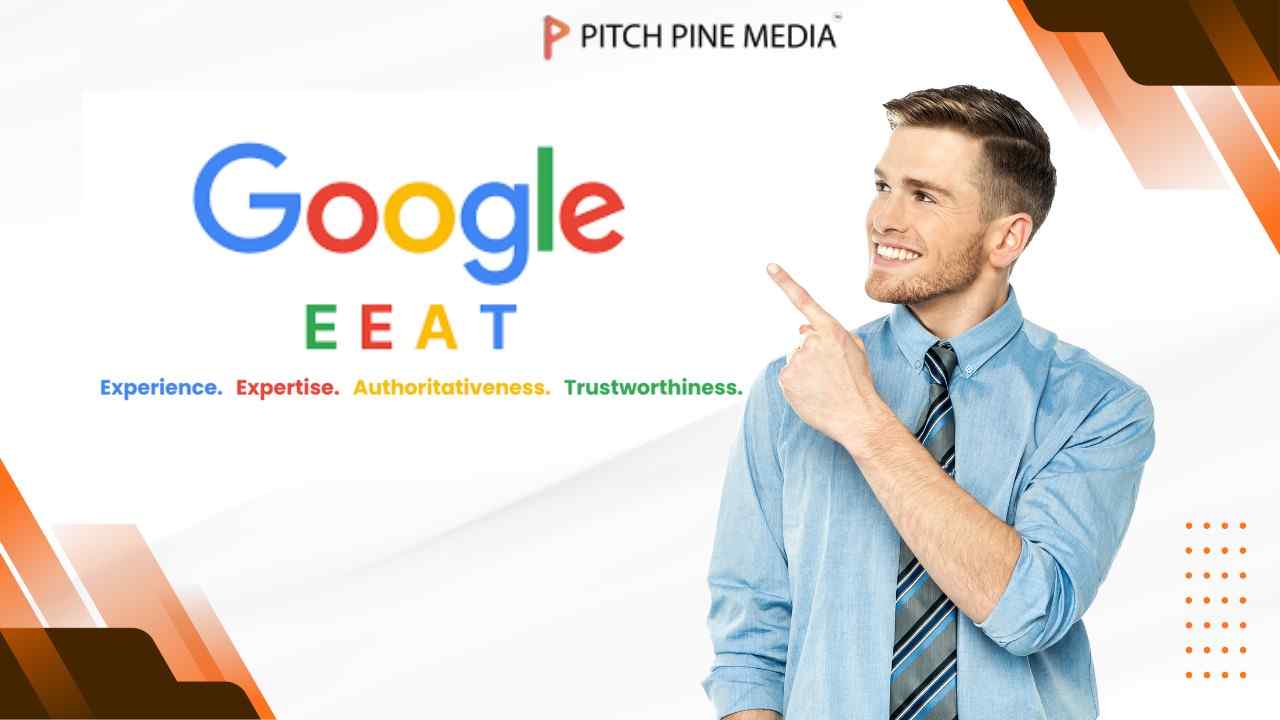
What is E-E-A-T SEO? The quick answer is that it’s how Google determines the reliability of your content. Experience, expertise, authoritativeness, and trustworthiness are represented by the letters. Google employs these concepts to determine which pages should appear when a user searches for important information.
You cannot operate a switch that reads E-E-A-T, which is a long-term quality indicator. For technical purposes, it is also not a “ranking factor.” A page is not rewarded by Google just because it checks a box. Rather, Google employs signals surrounding a page to determine whether the author is knowledgeable and whether readers can trust its content.
It is important for many kinds of material, including product reviews, tutorials, and blog entries. Today, the structure impacts almost every search category, but it is particularly crucial for delicate things.
Why Experience Matters?
The first E for Experience was included by Google because content compiled from secondhand information performs differently than content generated from actual engagement. The details that come from actual practice are hard to replicate, yet anyone can summarise knowledge.
Experience emerges in a variety of ways. Sharing anything you’ve developed, tested, or discovered via firsthand use could be the source. It might also take the form of a personal narrative that clarifies the subject. Experience indicates that you did more than just read.
Readers trust this; therefore, Google rewards it. Readers are more inclined to interact with your content if it demonstrates a personal connection. It is reflected in the algorithm.
Consider this if you’re looking to demonstrate experience on your website:
- Give particular examples to illustrate what you’ve learned.
- Disclose any errors or insights that shaped your comprehension.
- When you can, include original images, screenshots, or other proof.
- Instead of giving basic suggestions, explain the specific steps you took.
How Expertise Shapes Visibility?
Although expertise is valuable, it is insufficient if the subject requires deep understanding. Expertise is useful in this situation. A writer’s level of expertise is determined by how well they understand the subject.
Almost everything is affected by this. However, in fields like finance, health, law, and others, where people’s decisions are influenced by accuracy, it is much more important. Google aims to shield people from information that appears beneficial at first glance but is incorrect on a deeper level.
There are numerous ways to demonstrate expertise. You can give precise and understandable explanations. You are able to refer to reliable sources. Comments from those with professional backgrounds can be included. Additionally, you can produce lengthy content that demonstrates that you are not only repeating what has already been said.
Transparency is the key to enhancing expertise signals. Demonstrate your in-depth knowledge of the subject. Make sure the value of your content is genuine. Cite reliable sources when necessary. It demonstrates to readers the basis of the content.
Why Authoritativeness Matters
Authoritativeness originates from sources other than your own website. It is a measurement of your credibility with the rest of the online community. There is nothing you can claim for this. It is something you obtain by working hard or by working smart.
When other websites reference your insights, link to your guides, or quote your counsel, your authority increases. Google is informed that your work is noteworthy by these mentions. Users are also informed that your name is significant.
You can establish authoritativeness without being a big brand. It can be gradually expanded with regular material and sincere efforts. Creating pages that others can confidently refer to is crucial.
To create more powerful signs of authoritativeness:
- Post articles that assist people in resolving issues.
- Write guest posts for respectable websites in your field.
- Share information that gets natural recommendations.
- Provide helpful links that others will want to share.
Trustworthiness as the Core of E-E-A-T
The element that keeps everything together is trustworthiness. Without trust, the other components become less significant. Regardless of the amount of knowledge or skill a page boasts, it will not function effectively if it feels untrustworthy.
Transparency is key to trust. People who read the content are curious about the author. They want an easy way to reach you. They are interested in knowing how your data was collected. They are looking for an honest and safe website.
Among the numerous basic signals that Google searches for are:
- Author transparency
- Clearly identifying site administrators
- Successful safety
- Honesty in content
- A good reputation
How E-E-A-T Connects to Real SEO Strategy
It’s simple to consider SEO to be technical. Site structure, keyword research, tags, and metadata are all important. However, if your content is poor, none of those factors will matter. Today, Google is far more adept at distinguishing between thin stuff and true value.
For this reason, long-term growth is directly related to Google E-E-A-T SEO. Your content performs better by default when it demonstrates experience, expertise, authoritativeness, and trustworthiness. It keeps folks interested. It receives natural mentions. It draws people who come back.
Your brand benefits from using E-E-A-T as a long-term strategy in a number of ways.
- Stronger visibility in competitive niches
- Higher user engagement
- Better content performance over time
- More resilience during algorithm shifts
- A foundation that improves every part of your marketing
How to Strengthen E-E-A-T Across Your Content
To enhance your virtual E-E-A-T signals, start with the fundamentals:
- Make sure each article has clear author information.
- Provide firsthand knowledge and real-world examples to demonstrate experience.
- Provide reliable references.
- Maintain a transparent and safe website.
- Distribute work that benefits others and receives praise.
- Any content that seems out of date should be reviewed and updated.
- Consistently speak across your site. Trust is developed via stability.
The Bigger Picture for 2026
As search evolves towards trust, E-E-A-T will influence it for the time being. Individuals are looking for authors who are knowledgeable about the subjects they write about. Individuals seek honest results, tried-and-true approaches, and genuine viewpoints. To meet that expectation, Google is adjusting.
The road forward will be challenging if your website emphasises narrow pages or shortcuts. Even in busy areas, you may increase your visibility if your website prioritises value, clarity, and trust.
SEO has clear potential. High quality wins.
Conclusion
Rely on the Google E-E-A-T SEO fundamentals if you want to increase your visibility in 2026. Demonstrate your experience. Demonstrate expertise. Gain authoritativeness. Establish trust. By taking these actions, you can make your content stand out in the congested digital space.
If you want support in adopting these principles of Google E-E-A-T SEO, Pitch Pine Media can help you generate search-oriented content and build greater authoritative signals.
Looking for expert guidance? Contact us and we’ll help you get started.